CLAIMS VS EVIDENCE
Does Smoking Mullein Clean Your Lungs? What the Evidence Actually Shows
Mullein has a long history in traditional herbal practice, especially in discussions of the respiratory system. But traditional use is not the same as evidence that smoking mullein can cleanse, detox, or repair the lungs.
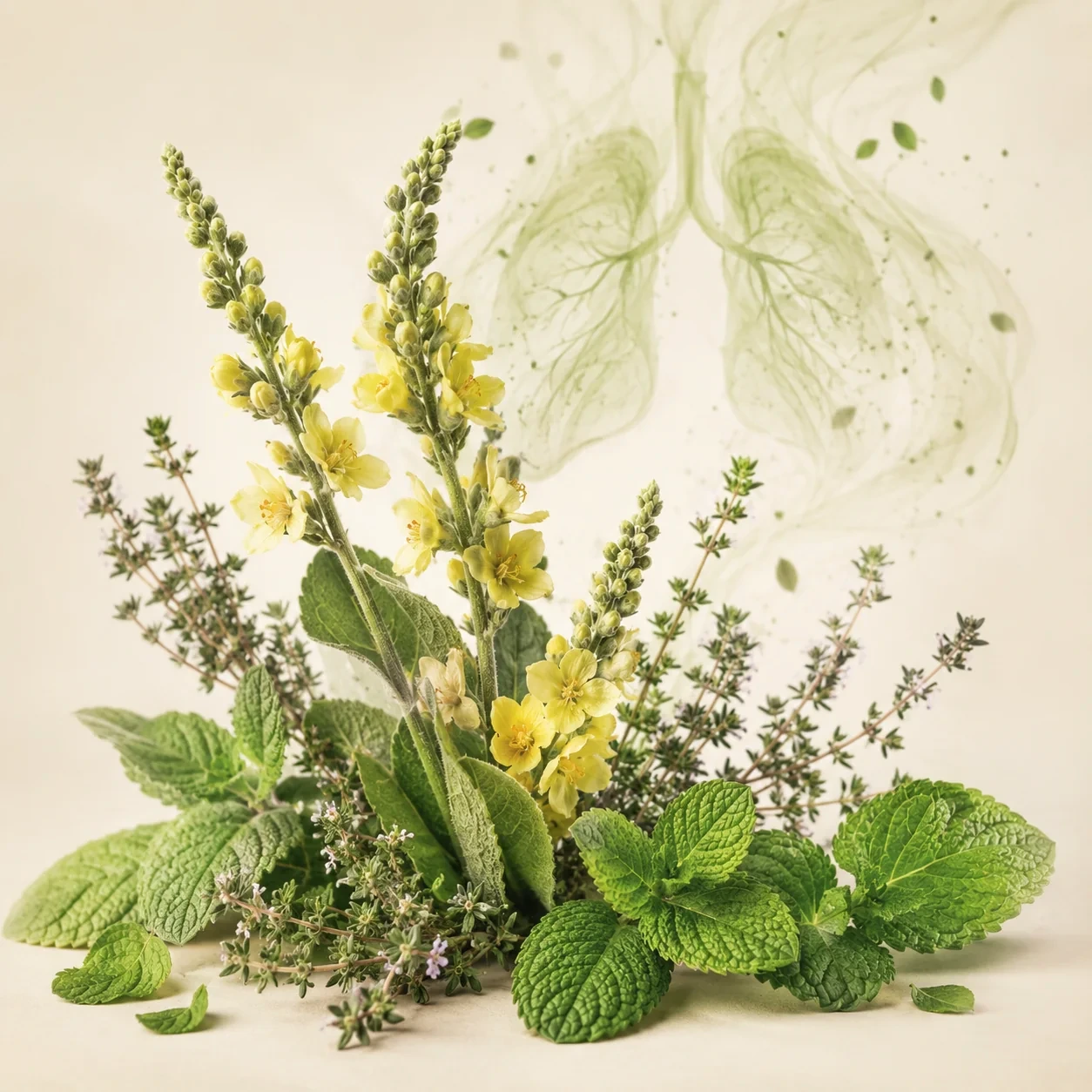
Current published evidence does not establish that smoking mullein cleans, detoxifies, or removes toxins from the lungs. Mullein has documented traditional respiratory uses, but research on the plant or its extracts should not be treated as proof that inhaling mullein smoke provides a lung-cleansing effect.
THE CLAIM
Where Does the “Mullein Lung Cleanse” Idea Come From?
Mullein has been used historically in traditional herbal practices involving the respiratory system. That history helps explain why modern searches often connect mullein with phrases such as “lung cleanse,” “lung detox,” or “lung support.”
However, a traditional use claim and a demonstrated clinical effect are two different things.
Historical use can tell us how a plant has been used. It does not prove that smoking the plant removes toxins, mucus, tar, or other substances from the lungs.
What Does Research on Mullein Actually Study?
Traditional Use
Scientific reviews document a long history of mullein use in traditional medicine, including respiratory-related applications.
Plant Compounds
Research has examined phytochemicals and biological activity found in Verbascum species and plant extracts.
Not the Same as Smoking
Evidence involving extracts, plant compounds, or traditional preparations does not automatically establish what happens when dried mullein is burned and its smoke is inhaled.
COMBUSTION MATTERS
Smoking Mullein Still Means Burning Plant Material
When dried mullein leaf is ignited, combustion occurs. The resulting material entering the airways is smoke produced from burning botanical material.
That is fundamentally different from studying an herbal tea, extract, oil, isolated plant compound, or other non-combustion preparation.
Smoke also contains airborne particles. Public-health guidance on particle pollution notes that smaller particles can travel deep into the lungs.
For a closer look at combustion, read
What Happens When Mullein Is Burned?
Does Smoking Mullein Remove Tar or Toxins?
There is not established clinical evidence showing that smoking mullein removes tar or toxins from lung tissue.
The popular words “cleanse” and “detox” can make a botanical product sound as though it physically removes unwanted substances from the lungs. That should not be assumed without evidence demonstrating such an effect.
Anecdotes, historical traditions, or the presence of potentially interesting plant compounds do not establish lung detoxification.
What About Mullein’s Traditional Respiratory Use?
Traditional respiratory use is part of mullein’s botanical history and is documented in scientific reviews.
The important distinction is that “traditionally used for respiratory purposes” does not mean “clinically proven to cleanse the lungs,” and it especially does not establish that smoking is the mechanism responsible for a benefit.
For the historical context, see
Mullein Traditional Use.
Smoking, Vapor, and Other Mullein Formats Are Not Interchangeable
Dried-leaf smoking involves combustion. Other mullein products can use completely different formats and formulations.
Evidence or claims associated with one preparation should not automatically be transferred to another.
Read
Mullein Smoke vs Vapor
for a format-based comparison.
Evidence Sources
For readers who want to examine the underlying material, useful starting points include scientific reviews of Verbascum thapsus and public-health information about airborne particle exposure.
PubMed: Health-promoting and disease-mitigating potential of Verbascum thapsus
Educational information only. This page does not provide medical advice. Mullein is not presented here as a treatment, lung cleanser, detox product, or method for removing toxins or repairing lung tissue. Anyone with persistent breathing symptoms or concerns about lung health should seek advice from a qualified healthcare professional.